
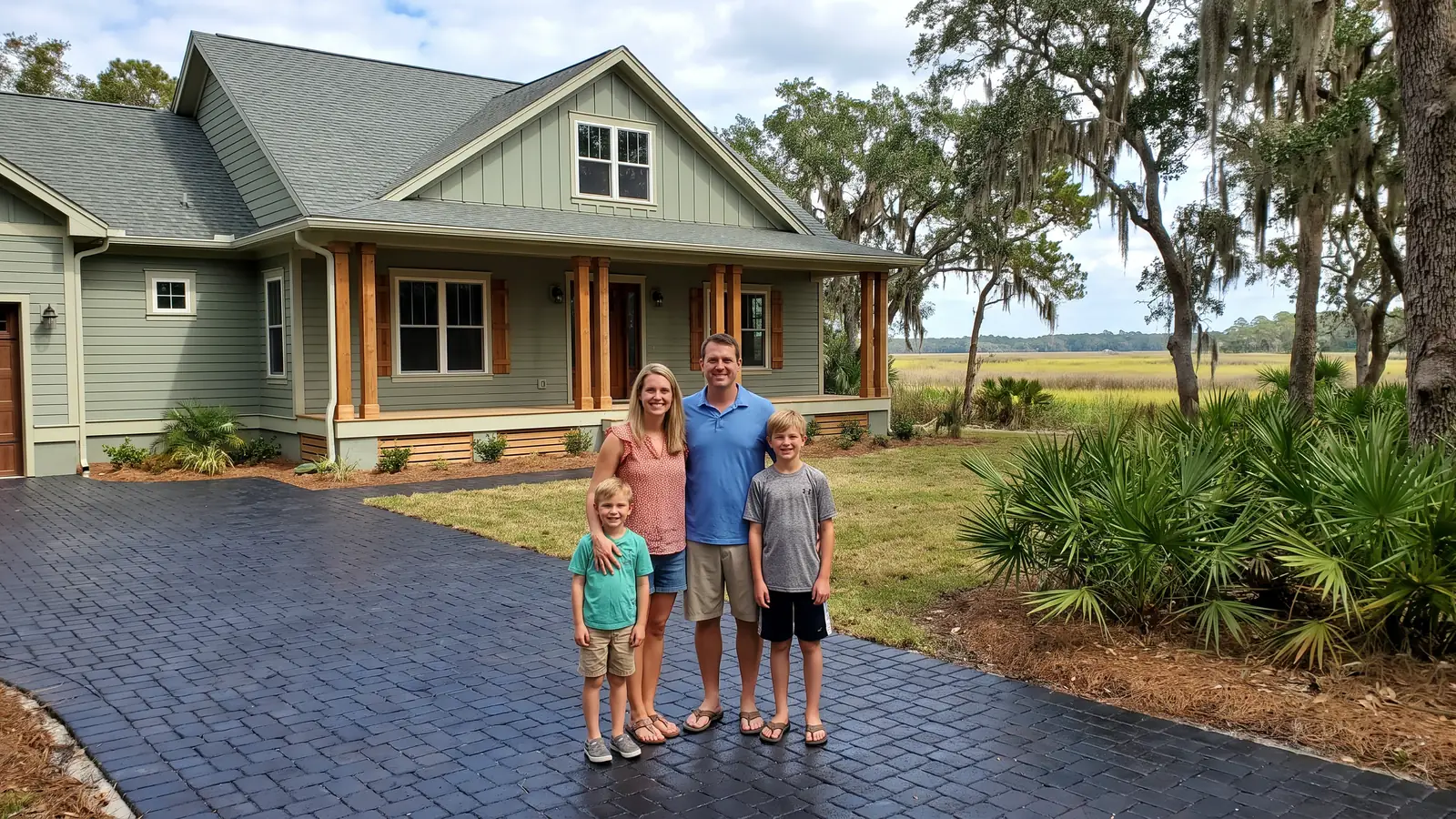
Paver sealing for Jacksonville Beach homes
Paver Sealing in Jacksonville Beach, FL
Salt air and the sea breeze are rough on Jacksonville Beach pavers, and (904) 479-0914 books a free sealing estimate.
- Brings out deeper paver color
- Fresh joint sand helps lock pavers in place
- Gives weeds less room to grow
- Makes the surface easier to keep clean
- Free estimate, no obligation
Request a Free Estimate
Free, no obligation.
Fast, careful paver sealing in Jacksonville Beach
Paver sealing in Jacksonville Beach starts with a free estimate, and a reply comes within 1 business day, usually much sooner. A local contractor cleans, re-sands and seals driveways, pool decks and walkways from the Seawalk to the Intracoastal side of town. To get on the list, get a free estimate.
Salt air leaves a chalky film on pavers, and weeds work up through tired joints. A rinse, a wash, fresh sand and a new coat clear the haze and bring the color back. Prefer to talk first? Call (904) 479-0914 and say how far your pavers are from the water.
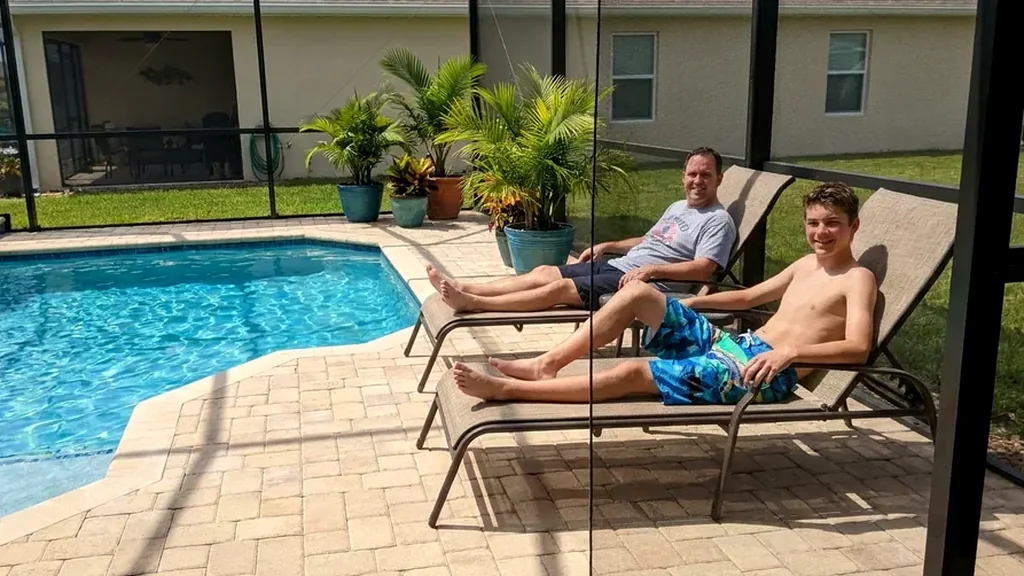
Why hire a local paver sealing contractor in Jacksonville Beach?
Beach homeowners pick a local paver contractor because salt air, sandy ground and sudden downpours all hit pavers at once. To hear how that plays out on your block, get a free estimate.
Free look, free price
Your Jacksonville Beach drive, deck or walk gets measured at no charge, and the price comes before any commitment.
Check bids against a range
Around Northeast Florida, companies list $1.75 to $3.25 per square foot for cleaning, sanding and sealing. Compare every bid to it.
Grip near the pool
A Jacksonville company calls matte the safest finish near pools, since gloss is slippery when wet. Ask about grip before you choose a finish.
Your call on timing
Pick a date that suits your schedule and the forecast. You can say no at any point before work starts.
Get Your Free Estimate in Jacksonville Beach
Tell us about your pavers in Jacksonville Beach.
Free, no obligation
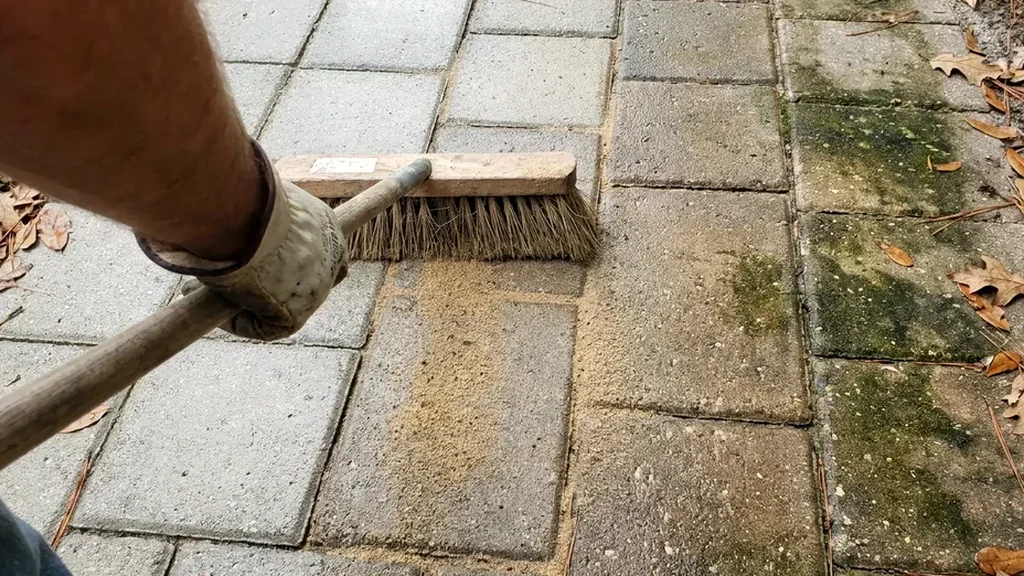
What paver problems show up most in Jacksonville Beach?
Salt on every surface
Jacksonville Beach sits on San Pablo Island, a 37-mile barrier island with the Atlantic to the east and the Intracoastal Waterway to the west. One beaches paver company reports that airborne salt settles on unsealed pavers and works into the pores, and that older pavers turn chalky under sun and salt. If your pavers feel rough or look pale, salt may be the reason. PaverGuard adds that the sea breeze pushes salty air across the beaches. That means a wash that clears the film is only half the answer, and a new coat is what slows the next buildup. Ask the contractor how often a rinse makes sense between coats.
Humidity that keeps pavers damp
The same beaches company says humidity keeps surfaces from drying out fully, and shaded north-facing spots grow algae and mildew. Jacksonville Beach averages 52.44 inches of rain a year over about 121.9 days, with August the wettest month at 7.54 inches. A patio on the shaded side of a house can stay green long after the front drive has dried. Tell the contractor which side of the house gets the least sun, since that is where the green will be thickest. A good estimate starts with that detail.
Joint sand that moves
Beaches companies say sandy ground and heavy summer rain make joint sand migrate. On December 6, 2016, a record 1.76 inches of rain fell at the airport and driveways near 12th Avenue South flooded, News4Jax reported. When water pools and then drains in a hurry, joints lose sand. Sand goes back into the joints before any coat. Empty joints also give weeds a place to root, which is why a bare strip along the garage turns green first.
Pavers after a surge
During Hurricane Matthew in 2016, water went over the dunes at Jacksonville Beach and inland to at least 2nd Street. Pavers that took salt water need a full rinse and wash before sealer. A Jacksonville company says sealing locks in whatever is there, so anything left on the surface stays put. That is why a storm-hit driveway gets extra rinse time before any sealer is opened. If your lot took water in a past storm, say so at the first visit. Matthew's water reached at least 2nd Street, so the question is not only for oceanfront homes.
Slick finishes near the pool
A Jacksonville cost guide says film-forming sealers can trap moisture and create slip hazards, so most Jacksonville pool decks get a penetrating sealer that keeps traction when wet. Another company says pool decks need an anti-slip additive with any finish, because gloss without it is slippery when wet. That matters most for bare feet and children. Changing finishes later means stripping, so pick well the first time.
Does paver sealing differ in Sea Grove, Ocean Terrace and San Pablo Terrace?
Do Sea Grove and South Pablo Beach need different plans?
Yes, because each area has its own age and layout. Sea Grove, beside South Pablo Beach, has 174 homes built in the 1920s, and South Pablo Beach is a coastal pocket with a walkable grid. Close to the ocean, salt matters most, so tell the contractor how many blocks you are from the beach when you get a free estimate.
What about Ocean Terrace and San Pablo Terrace?
Ocean Terrace dates to the early 1980s, is mostly single-family homes and has a confirmed HOA. Homes in San Pablo Terrace, off Penman Road, went up between 1955 and 2005, with 1963 as the median year. Older lots tend to mean older paving, and a past owner may have used a sealer nobody wrote down. Call (904) 479-0914 and mention what you know about yours.
Does city right-of-way affect a driveway apron?
Part of your driveway apron may sit on city right-of-way. The city's FAQ says many homeowners use right-of-way next to their homes and that most of that use needs a revocable encroachment permit. Its urban trails FAQ says paver driveway aprons will be removed and then replaced where the trail goes in. Ask the city about your address before sealing an apron, then get a free estimate.
What does paver sealing cost in Jacksonville Beach?
What does salt air do to the price?
Expect between $1.75 and $3.25 a square foot to clean, sand and seal, the figure companies around Northeast Florida publish. Salt buildup, algae and lost joint sand push a beach job up that range, while clean pavers with full joints sit near the bottom. A small courtyard costs more per square foot than a wide driveway, since a Jacksonville cost guide says prep time does not shrink with the surface. To price yours, get a free estimate.
Does a pool deck change the finish?
Pool decks add a wrinkle, because a penetrating or matte finish with grip is the usual choice there. A Jacksonville company says changing finishes later means stripping, which adds cost. Settle the finish before work starts,. Call (904) 479-0914 and describe your deck.
| Paved area | Typical example | Clean, sand and seal |
|---|---|---|
| 300 sq ft | Small patio or walkway | $525 to $975 |
| 600 sq ft | Two car driveway | $1,050 to $1,950 |
| 1,000 sq ft | Large driveway or pool deck | $1,750 to $3,250 |
| 1,500 sq ft | Driveway plus pool deck | $2,625 to $4,875 |
Math based on the $1.75 to $3.25 per square foot that Northeast Florida paver companies published as of November 2026. Your contractor sets the actual price after seeing the surface. Repairs, leveling and stripping failed sealer are usually extra.
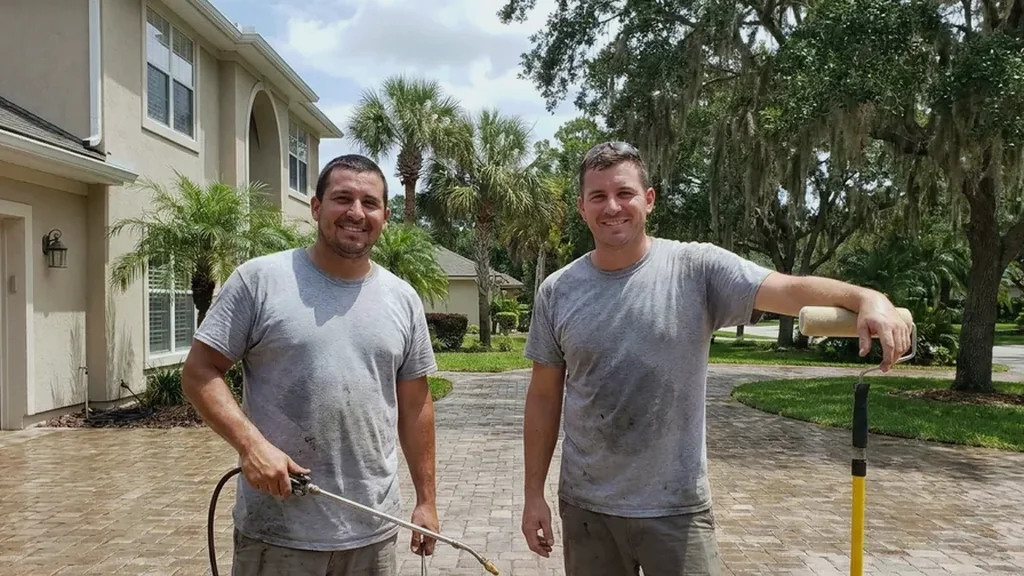
How does a paver sealing job work in Jacksonville Beach?
Walk the lot and check the edges
The contractor looks at where water runs, how close the pavers sit to the street and whether any section has sunk or lifted. A Jacksonville company says sealing over a dip only preserves it, so repairs come first. Ask about your apron too, since part of it may be city land. Share what you know about the driveway's age and any earlier work. Bring up sprinkler heads and landscape lights, so the crew knows what to work around.
Rinse and wash off the salt
Cleaning clears salt film, algae and mildew from the surface, so the joints and edges show their true condition. A paver maker notes that routine rinsing helps manage salt buildup on the coast. Stains are pretreated, and a few deep stains may stay faintly visible. A deck or drive that has not been washed in years takes longer here, so a longer day is normal. The contractor can tell you after one look.
Put the sand back
Washing pulls joint sand out, and sandy ground and summer rain move it around anyway. The contractor refills the joints and sweeps the surface. Sweeping leaves a clean, even top for the sealer. Joints filled to the top block soil and weeds and keep the pavers locked in.
Wait for a dry window
PaverGuard says never to seal over a damp surface or right before a forecast downpour. Humid beach air can slow drying, so a careful contractor checks the forecast and the surface. Patience here is what keeps the finish clear instead of cloudy. A coat laid on damp pavers can turn cloudy white. Shaded corners and low spots are the last to dry, so they get checked by hand. If any spot is still dark, the contractor waits.
Seal with grip where it counts
The sealer goes on sprayed and back-rolled, in the finish you chose. Pool decks and steps get a finish that keeps traction when wet. Matte is the quiet choice, and it hides scuffs better than a wet look. Get the product name in hand, and keep it for the next coat. That one note makes the next job simpler. Foot traffic is usually fine within a few hours, and cars should stay off for about a day, a Jacksonville company says.
Complete paver services in Jacksonville Beach
What happens first on a beach job?
A beach job starts with a rinse to clear salt, then a wash, fresh sand and a dry wait. Sealer goes on last. A Jacksonville company says sealed surfaces rinse off later instead of needing pressure washing. To ask how this would run at your address, call (904) 479-0914.
Which surfaces take the most wear?
Driveways take tires and salt air. Pool decks take chlorine, sunscreen and bare feet. Walkways and courtyards sit close to the house, where sprinklers and shade matter most. Each surface wears in its own way, so tell the contractor which ones you have when you get a free estimate.
Do film forming and penetrating sealers differ?
Sealers come in two broad types. A trade supplier says film-forming acrylics sit on the surface and stabilize joint sand, while silane or siloxane products soak in and leave the look unchanged. A Jacksonville company calls matte the safest finish near pools. Call (904) 479-0914 to choose for your pavers.
When in hurricane season is sealing wise?
Hurricane season runs June 1 to November 30, with its peak on September 10. A Jacksonville cost guide says fall sealing after the season protects pavers through the dry winter, and spring sealing locks in the surface before summer humidity peaks. To book a window that fits, get a free estimate.
Questions to ask before you hire
- What happens if rain comes the afternoon after the job?
- Will sealing bring back the original color or only darken the pavers?
- How soon will my pavers need sealing again?
- Will the estimate be in writing before I pay a deposit?
- How do you measure my pavers so the final price matches the quote?
- Which finish will you use on my pavers: matte, natural or wet look?
- What keeps the cleaner and sealer off my grass and flower beds?
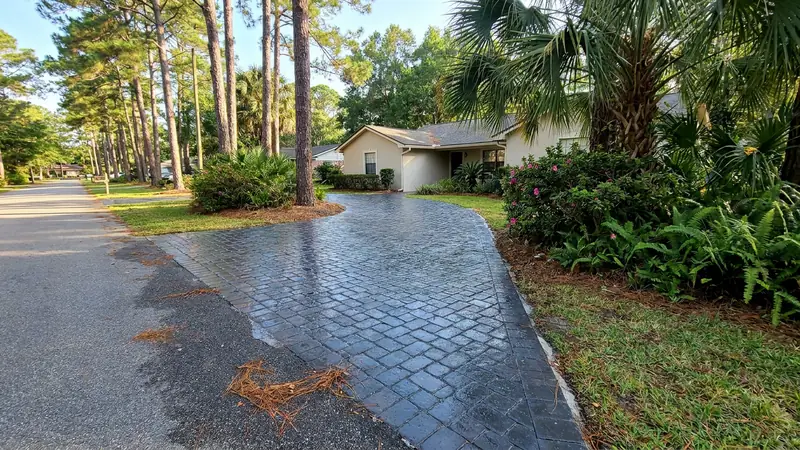
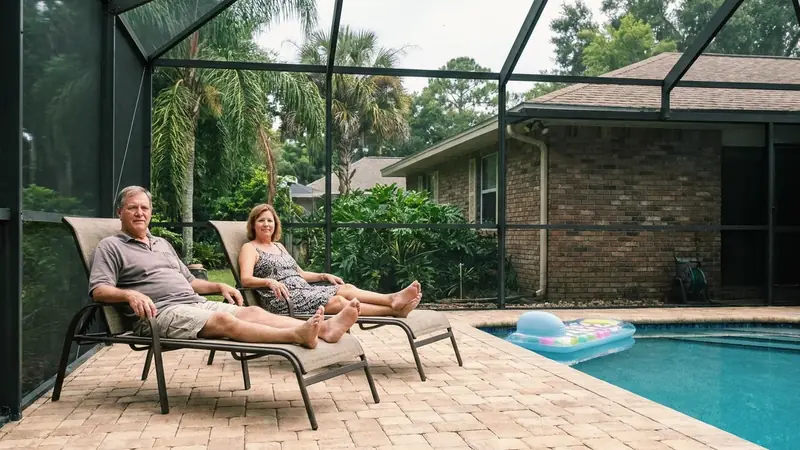
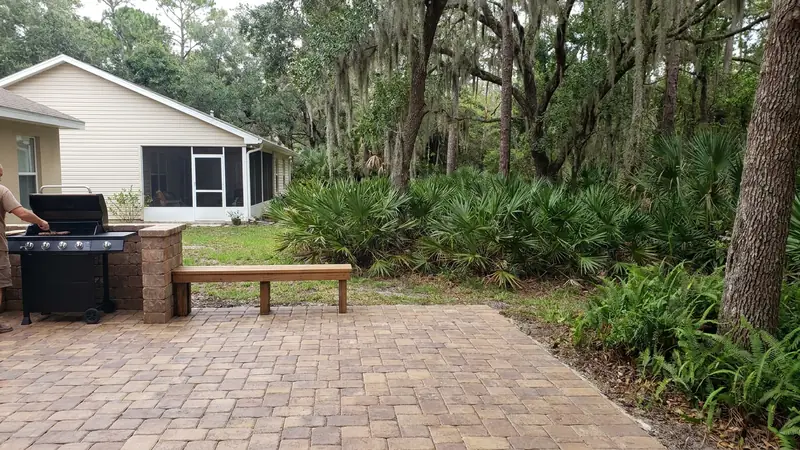
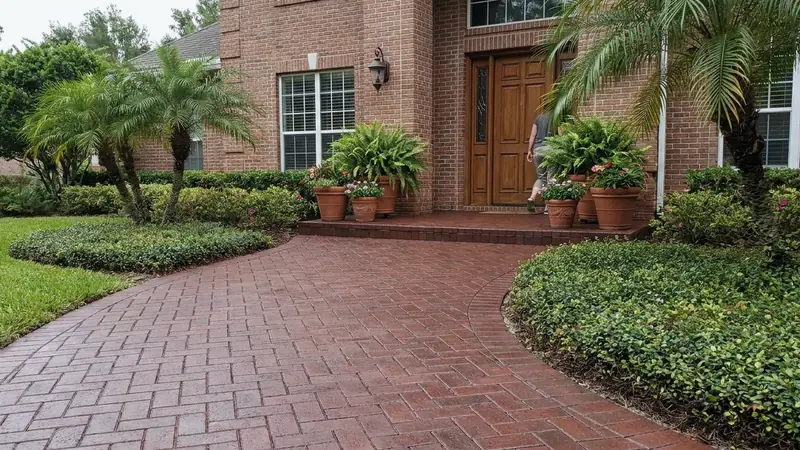
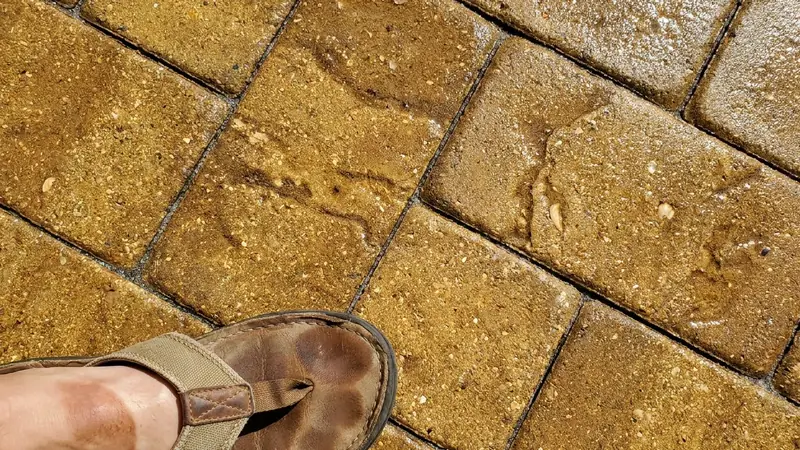
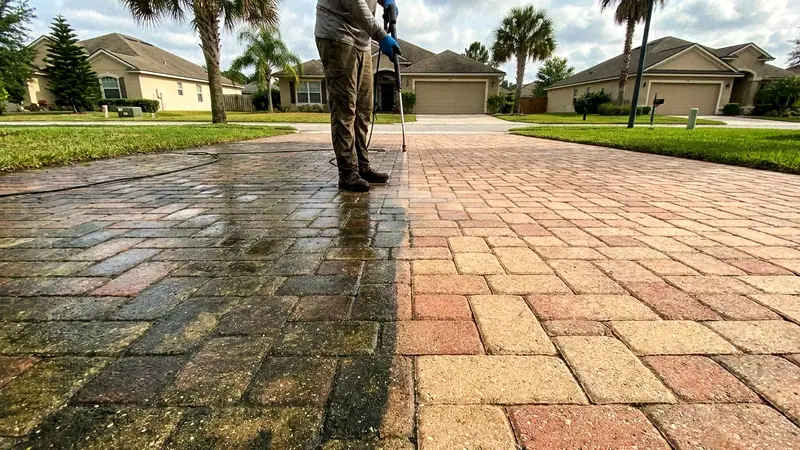
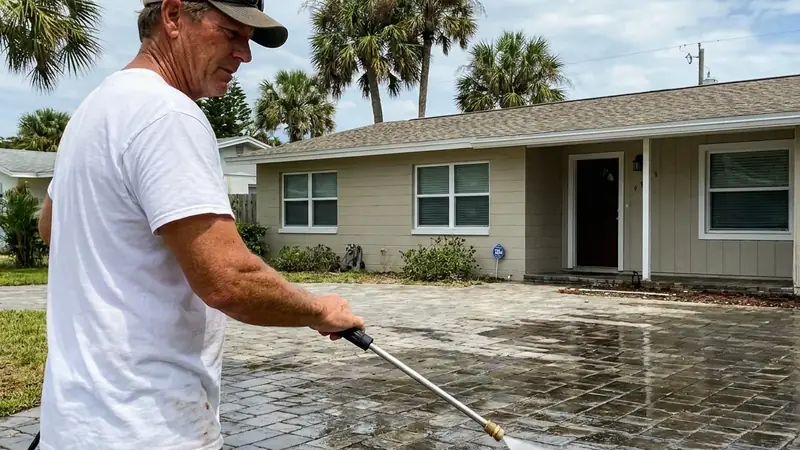
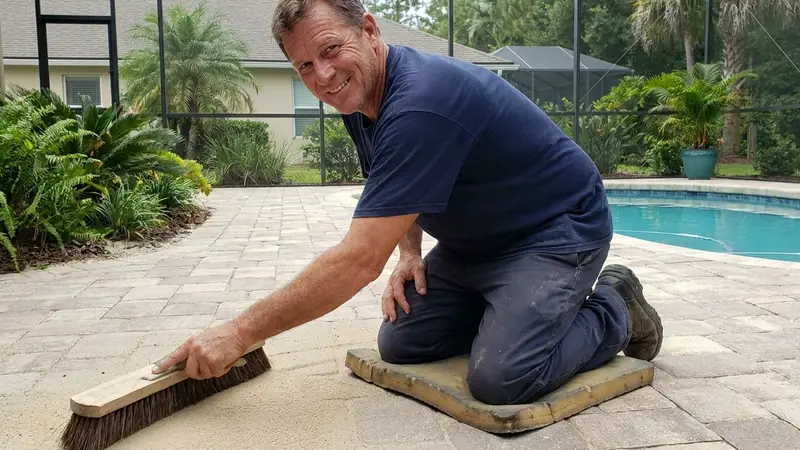
What do sealed pavers look like around Jacksonville Beach?
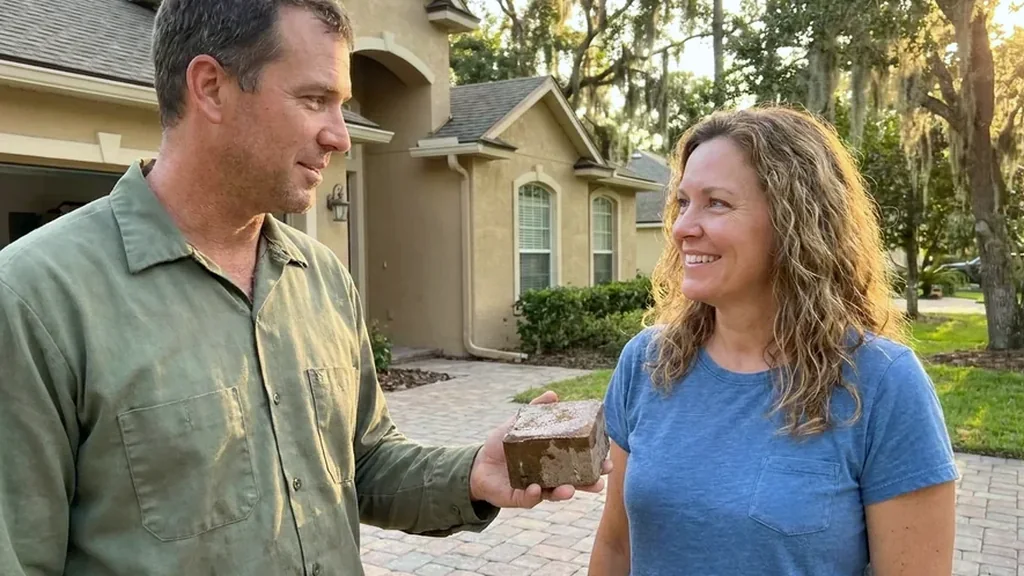
Why local matters in Jacksonville Beach
Why does ocean distance matter to a contractor?
A contractor who works the beaches asks how close you are to the ocean, because salt exposure sets how much rinsing comes first. Salt spray reaches inland too, since University of Florida notes damage on plants within a couple of miles of salt water. Pavers face the same air. Call (904) 479-0914 to reach a local contractor.
How do city rules shape a driveway job?
Rules at the beach are local too. The city says most use of right-of-way needs a revocable encroachment permit, and it updated its paver driveway standards in October 2023. A local contractor knows to ask whether your apron is affected. You can get a free estimate and mention your street.
What does low ground mean after a storm?
Water covers 66.61 percent of the city's total area, and its elevation is listed as 0 feet. Low ground means water can sit after a storm, so a local contractor asks about standing water and checks the forecast before sealing. A real estate page found 69 percent of 191 checked listing addresses outside FEMA's Special Flood Hazard Area. To talk through your lot, get a free estimate.
Does it help to hire someone who knows Jacksonville Beach's pier and Seawalk?
Where does the pier fit into directions here?
Yes, because those landmarks anchor most directions here. The Jacksonville Beach Pier reopened July 6, 2022, after a three-year rebuild. Latham Plaza and Seawalk Pavilion, at 11 1st Street N, is a public space with an amphitheater. If you live near either one, get a free estimate.
What do Casa Marina and the mid-century homes say about age?
The Casa Marina Hotel was completed in 1925 in the Mission style, and the city has a notable collection of mid-century modern homes. The Beaches Museum at 381 Beach Boulevard holds a history park with the area's first post office. For a home within sight of the pier or the Seawalk, call (904) 479-0914 and name your street.
Frequently Asked Questions
Is it good to seal pavers in Jacksonville Beach?
Yes, on a barrier island with salt air and heavy rain, a coat helps. It slows stains and keeps joint sand from washing away, which helps hold weeds and ants back. Florida sun fades unsealed concrete pavers within 3 to 5 years, one Jacksonville company says. Sealing will not fix a sunken paver, so repairs come first. Point out any low spots at the estimate, and the contractor can add them to the plan. The city has a notable collection of mid-century modern homes, many by architect William Morgan, so ask about a finish that suits the house.
How long do paver sealers last in Jacksonville Beach?
Companies commonly quote two to five years between coats, and a beach lot with full sun sits at the short end. Near the coast or in full sun, a driveway needs resealing about every 18 to 24 months, PaverGuard says. A coat that makes water bead is working, and one that lets water soak in is spent.
What is the average cost to seal pavers in Jacksonville Beach?
Budget $1.75 to $3.25 per square foot to clean, sand and seal, which is the range companies around Northeast Florida publish. Salt film, algae or a failed old coat all raise the price, and a Jacksonville company says strip-and-reseal sits above the base range. Small courtyards cost more per square foot than big drives, since prep time does not shrink with the surface.
Should paver sealer be sprayed or rolled in Jacksonville Beach?
Professionals usually do both. A Jacksonville company says crews typically spray the sealer and then back-roll it, so it goes on evenly and works into the joints. Ask how the pavers at your address would be coated. Spraying covers ground quickly, and the roller works the sealer into the joints.
Which finish is safest around a pool deck in Jacksonville Beach?
Matte is the safest finish near pools, one Jacksonville company says, and pool decks need an anti-slip additive with any finish. Another says most Jacksonville pool decks get a penetrating sealer that keeps traction when wet. Ask the contractor what grip your finish will have.
Can pavers be sealed during hurricane season in Jacksonville Beach?
Yes, if the pavers are dry and no downpour is forecast. A dry fall day is often easier to find than a summer one. The season runs June 1 to November 30. PaverGuard says never to seal over a damp surface or right before a forecast downpour. A cost guide says fall sealing after the season protects pavers through the dry winter.
Do I need a city permit to redo my driveway apron in Jacksonville Beach?
It may depend on the land. The city says most use of right-of-way needs a revocable encroachment permit, and its paver driveway standards were updated in October 2023. Ask the city about your address before work on an apron. A short call can settle whether sealing or a redo is wise, and it costs little.
When can cars and feet go back on the sealed surface?
Foot traffic is usually fine within a few hours, and cars should stay off for about a day, a Jacksonville company says. Humid beach weather can change that. Ask the contractor which timing goes with the product on your pavers.
Nearby areas we serve
Ready for a Free Estimate in Jacksonville Beach?
Call (904) 479-0914 and tell us about your pavers.
Free, no obligation