
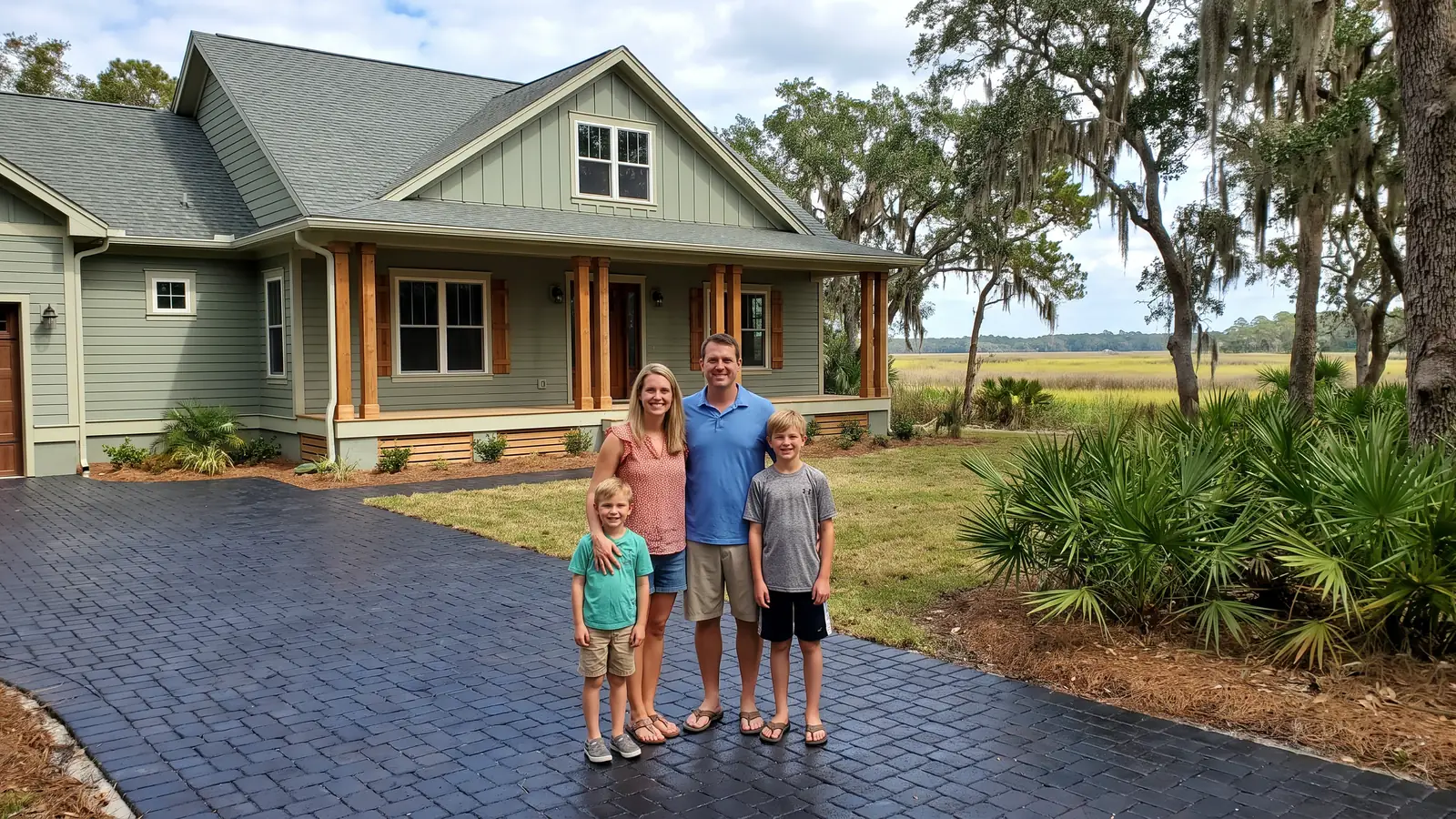
Paver sealing for Arlington homes
Paver Sealing in Arlington, FL
Wide Arlington drives soak up the afternoon sun, so call (904) 479-0914 to ask about a free sealing estimate.
- Brings out deeper paver color
- Fresh joint sand helps lock pavers in place
- Gives weeds less room to grow
- Makes the surface easier to keep clean
- Free estimate, no obligation
Request a Free Estimate
Free, no obligation.
Fast, careful paver sealing in Arlington
Paver sealing is available across Arlington, from the ranch-house streets near Jacksonville University to the blocks along the St. Johns River. A local contractor does the cleaning, the sanding and the sealing on driveways, walks and patios, and the estimate is free. Reach (904) 479-0914 today, and an answer arrives within 1 business day, usually much sooner.
Think of a wide ranch driveway that has baked in the sun for years. The red has gone pink, the joints are low and a few weeds have set up along the edge. A wash, fresh sand and a coat can bring it back, and you can get a free estimate to get started with a short description of the lot.
Why hire a local paver sealing contractor in Arlington?
Wide driveways came with Arlington's car-era streets, and a local paver contractor knows how to handle them. To find out what yours needs, get a free estimate.
Quote on site
A local contractor looks over your Arlington pavers in person and names a price. Asking commits you to nothing.
A range to anchor on
Companies in the region post $1.75 to $3.25 per square foot for a clean, sand and seal. Hold your quote up to it.
Sheen to match
Matte suits mid-century lines and shows fewer scuffs, while a wet look deepens red and tan but wears visibly sooner.
Free, no strings
The estimate is free, and the day is yours to pick when you are ready.
Get Your Free Estimate in Arlington
Tell us about your pavers in Arlington.
Free, no obligation
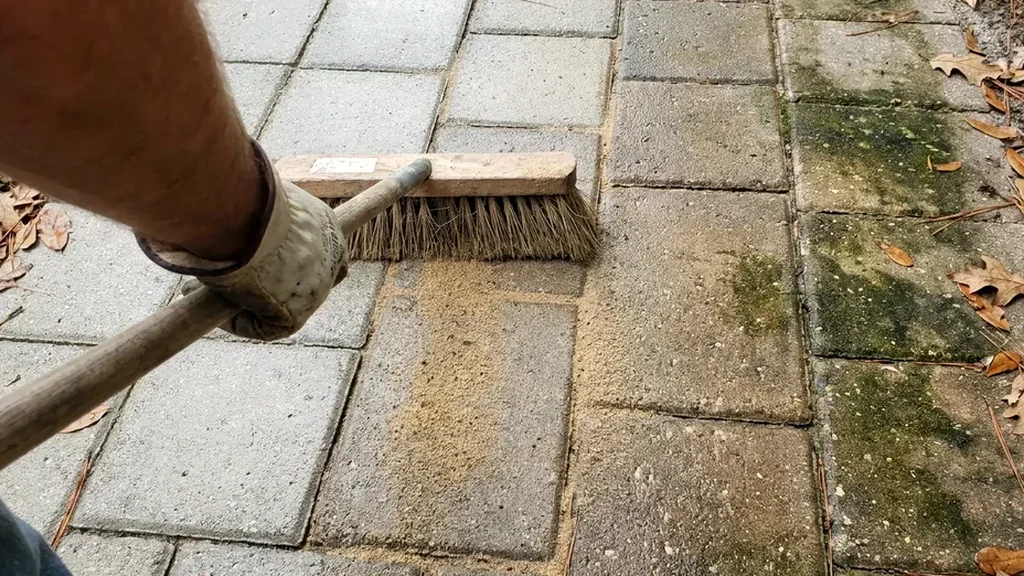
What paver problems show up most in Arlington?
Sun on wide ranch driveways
Many Arlington homes are 1950s and 1960s ranches, and a ranch often has a wide, open drive with little cover. Decades of that exposure add up. Left unsealed, concrete pavers fade noticeably within 3 to 5 years in the sun, one Jacksonville company says. A coat works like sunscreen for the color, and it keeps dirt from soaking in. That matters most where the drive faces south or west and bakes all afternoon. Walk out at 3 p.m. and look at which strip has gone palest. In River Forest, the median home runs about 1,312 square feet, so most lots are ranch-sized rather than sprawling. H. Terry Parker of Gulf Life began buying land around 1943, and Arlington became Jacksonville's first major post-war suburb built for the car, which is why so many drives are wide. Jacksonville University's 260-acre campus sits among these same streets, and wide, open frontage is common near it.
Street water from creeks and culverts
Pottsburg Creek is fed mainly by rainwater, retention ponds and storm drain runoff, and its boat ramp has flooded in a tropical storm. The creek is 16 miles long and reaches the river near Arlington. In July 2022, homeowners on Woolery Drive in Arlington Hills had dealt with street flooding for at least a year. Water that crosses a drive can pull joint sand with it and leave a film, and the film hides the real color of the pavers. The wash and the sand refill matter more on a lot like that, and a quick look at the low corner of the drive tells the contractor a lot. The city planned to rebuild a culvert under Arble Road to relieve the Woolery Drive flooding, which shows how much water can move through one block. Pottsburg Creek is 16 miles long and ends at the river near Arlington, and its boat ramp flooded in Tropical Storm Fay, so water is part of the local picture.
Sand lost to heavy summer storms
Rain tallies about 52 inches a year here, and May to September brings the hard, thunder-heavy downpours. A trade guide says weeds appear where joints widen and lose sand, letting soil in. A drive with low joints is a weed bed waiting for a seed, and the seed always arrives. Refilling before the coat is what keeps it from happening again, and sealed joints help hold off ants too. Strong storms can move sand within a single afternoon, so check the low corner after one. Refilling the joints before the coat is the one fix that lasts through the next summer.
Pavers added to an older house
The median home in the River Forest part of Arlington was built in 1951, and many sales there are 1950s and 1960s ranches. Pavers on those lots came later, from different owners and installers, so one block can hold three different products and three different ages. The sealer on them may be unknown, and nobody may have kept a receipt. The contractor checks for solvent-based sealer first, since water-based products cannot go on top of it. Old Arlington, Inc. says many 1950s and 1960s houses still stand, which means many Arlington pavers were added well after the houses. A recent purchase means the seller may remember what went on the pavers, and a call can save time.
Green film on shaded paths
A side path under an oak, beside a fence or along the north wall can stay damp for hours, which is how a green stripe starts. According to a landscaping trade guide, heavy shade is what lets moss and algae settle on pavers, and treatments do little while the pavers stay damp. So the green is a shade problem first. It is washed off before sealing, or the coat would lock a living film under the surface. Treating the green without drying the pavers only buys a short break. Pavers beside a fence or a north wall are the usual trouble spots. A path that stays green after weeks of dry weather is the clearest sign.
Are Arlington's 1950s ranch streets different from the newer parts of Arlington?
Yes, because Arlington covers a lot of ground and was built in stages. Wikipedia places Arlington across the part of Jacksonville that sits east and south of the St. Johns and west of the Intracoastal Waterway, north of the Arlington River. The mid-century streets near Jacksonville University differ from newer pockets farther out. Share your street and the year your house was built when you get a free estimate.
H. Terry Parker of Gulf Life began buying Arlington land around 1943, and the area became Jacksonville's first major post-war suburb built for the car. Many 1950s and 1960s houses still stand, and in River Forest the median home was built in 1951 and runs about 1,312 square feet. Call (904) 479-0914 and say which part of Arlington you live in.
Old Arlington, Inc. gives tours of the mid-century modern homes, with their sharp edges and sloping roofs, and the area drew flocks of young families between the 1940s and the 1970s. Pavers beside a home like that look best in a quiet matte finish that does not compete with the lines of the house. If your home has a distinctive design, you can get a free estimate and describe it.
What does paver sealing cost in Arlington?
Your Arlington price starts with square footage. Companies in the region post $1.75 to $3.25 per square foot for a clean, sand and seal, so a broad ranch drive with a walk and a patio adds up fast. Film, lost sand and an old coat nudge the rate up or down. Call (904) 479-0914 for a figure on your lot.
Stripping an old failed coat is extra, one Jacksonville company says, and a first coat on clean pavers is the simpler job. Line bids up by asking each company to price every step separately. You can get a free estimate and request that breakdown.
| Paved area | Typical example | Clean, sand and seal |
|---|---|---|
| 300 sq ft | Small patio or walkway | $525 to $975 |
| 600 sq ft | Two car driveway | $1,050 to $1,950 |
| 1,000 sq ft | Large driveway or pool deck | $1,750 to $3,250 |
| 1,500 sq ft | Driveway plus pool deck | $2,625 to $4,875 |
Math based on the $1.75 to $3.25 per square foot that Northeast Florida paver companies published as of November 2026. Your contractor sets the actual price after seeing the surface. Repairs, leveling and stripping failed sealer are usually extra.
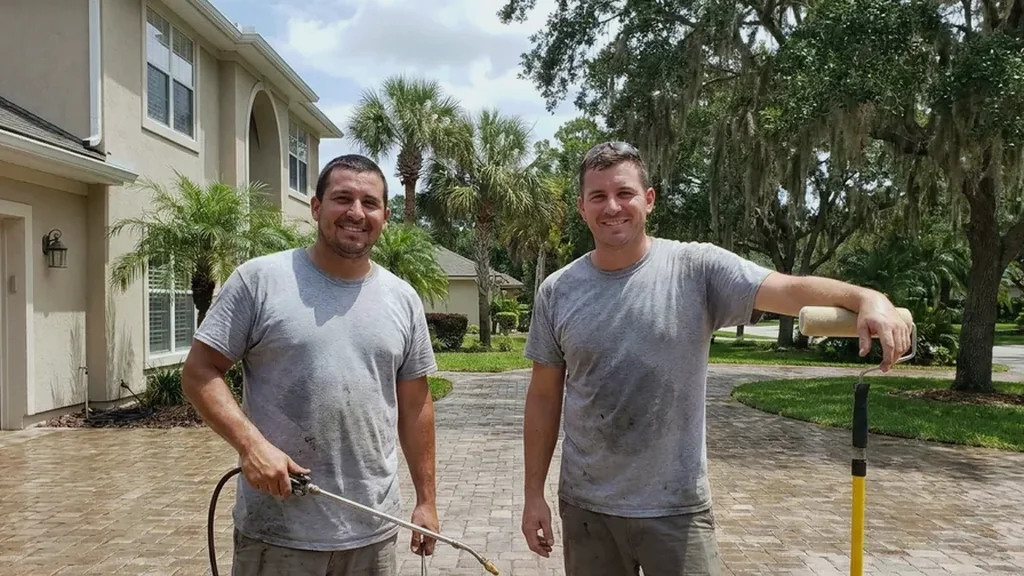
How does a paver sealing job work in Arlington?
Survey the property
The contractor measures each paver area, noting shade, low spots, stains and loose edges, and asks how long the pavers have been down. Dips are marked for repair first, since sealing locks in whatever lies under it. Any earlier coat gets identified before a product is picked. Photos of any spot where water lingers after rain help the visit. This visit is also the time to say which sheen you prefer.
Wash and pretreat
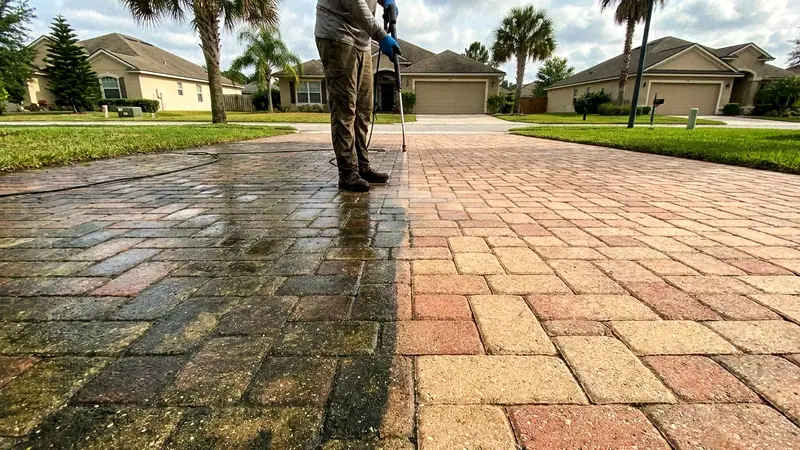
Gray film, green growth and loose sand come off the surface. Pretreatment goes on oil, rust and tire marks, and some deep stains may stay faintly visible, which you hear up front. Low spray angles protect eaves, vents and beds. Beds beside the paving get covered where needed. Expect a few hours for a broad drive, and longer if a pool deck is on the list.
Re-sand the joints
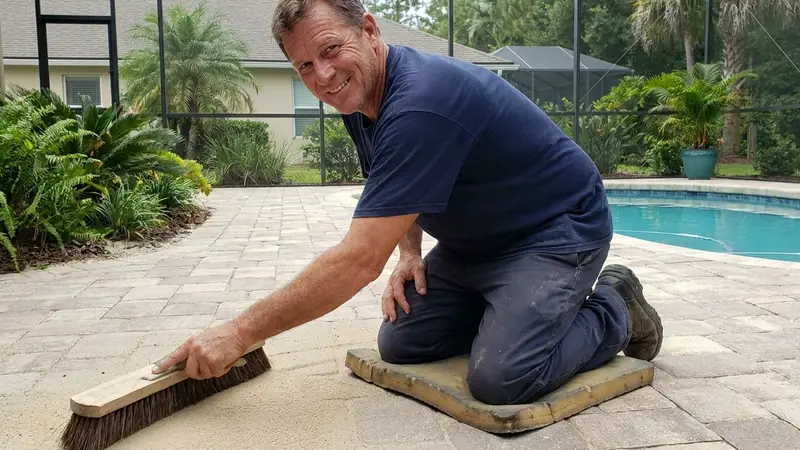
Because washing removes joint sand, fresh sand is packed in until the joints are full, then the extra is swept off. With the joints full, soil and weeds have far less room to settle. A drive that has lost sand for years may take more than you expect. The surface is brushed clean so no loose sand gets sealed in. On older drives, the joints may take more sand than the owner expects.
Hold for dry weather
The coat needs a dry surface, and May to September brings the heaviest rain. Damp pavers are a known cause of cloudy-white sealer, a local company says. Shaded side paths often dry last, so the contractor checks them by hand. If a storm is coming, the date moves and you hear about it early.
Apply and cure
A Jacksonville company's method is to spray the sealer and back-roll it in your chosen sheen. You can walk on it within hours, though cars wait about a day. Quotes for the next coat run two to five years out, depending on sun and traffic. Confirm the wait for your product when the date is set.
Complete paver services in Arlington
A typical Arlington job has four beats: wash, refill, dry, seal. Wide ranch drives stretch the first two, since there is simply more surface to clean and fill. Skipping a beat tends to show within a season. For a rundown on your property, call (904) 479-0914.
Surfaces here range from broad driveways to front walks, pool decks and patios. Drives bake in afternoon sun and collect oil, pool decks need a grippy finish when wet, and shaded paths green up. Tell the contractor your mix when you get a free estimate.
The sealer decision has two layers: the base and the sheen. A solvent-based coat from years ago rules out water-based products, so the old coat decides first. Matte pairs well with clean mid-century lines, and a wet look gives red pavers more depth. Call (904) 479-0914 for advice.
Weather sets the calendar. Arlington gets the same summer storms as the rest of Duval County, so a date can slide, and a shaded patio can dry slowly. A drive that sheds water across one corner may need extra time. To book a day, get a free estimate.
Questions to ask before you hire
- Will you refill the joint sand that washes out during cleaning?
- What happens if rain comes the afternoon after the job?
- Will the estimate be in writing before I pay a deposit?
- Can you reset pavers that have sunk or tilted before sealing?
- Which finish will you use on my pavers: matte, natural or wet look?
- How do you work around my sprinkler heads and landscape lighting?
- Can you send proof of insurance before the day of the job?
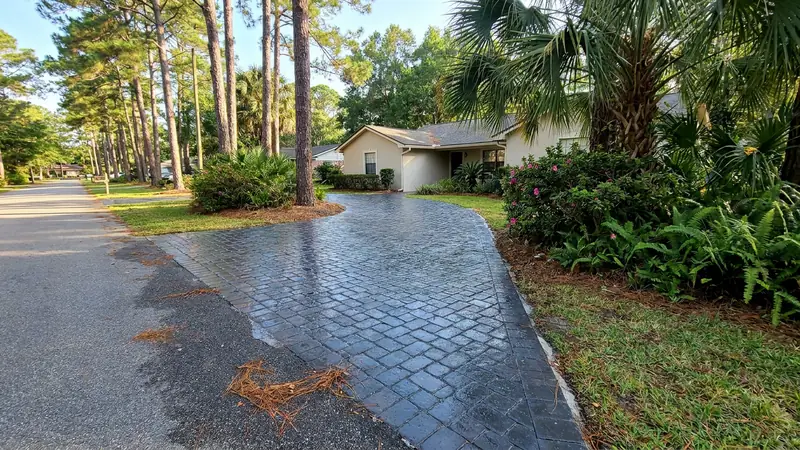
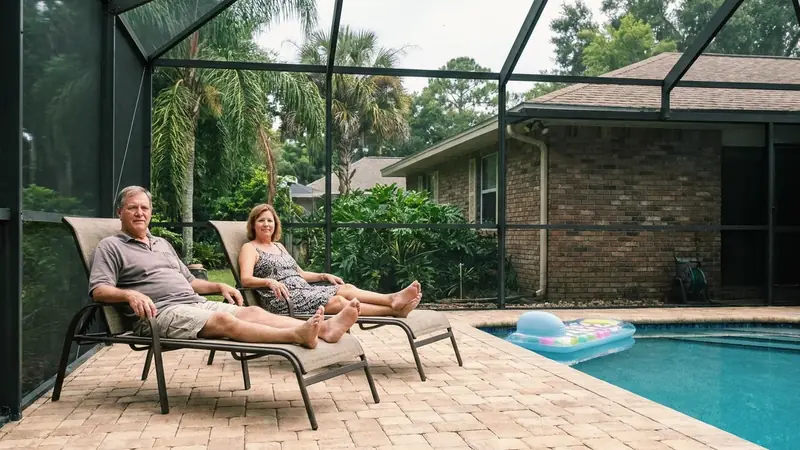
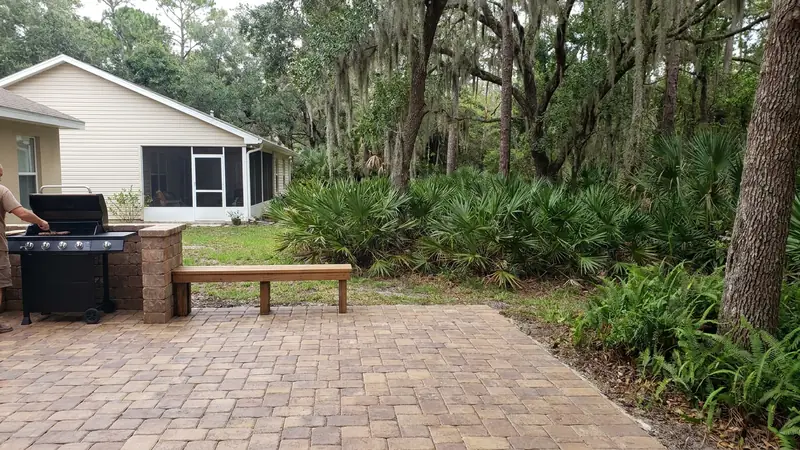
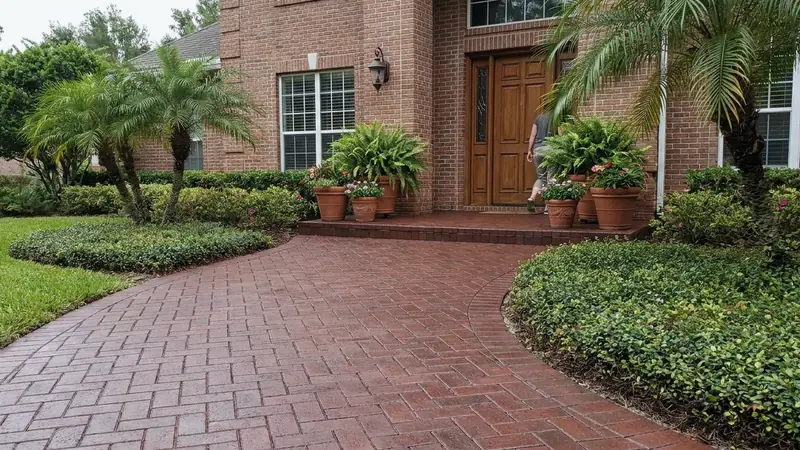
What do sealed pavers look like around Arlington?
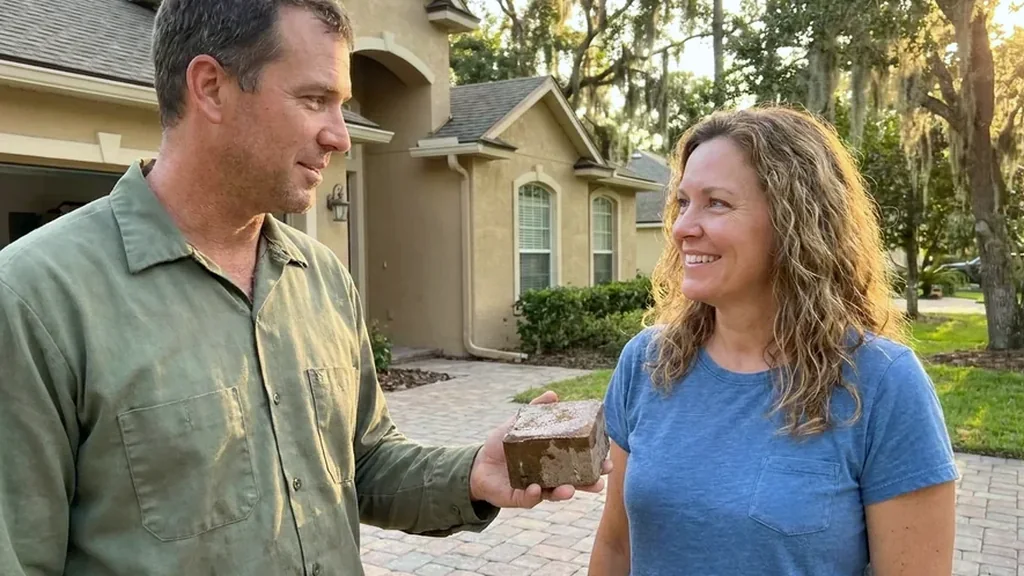
Why local matters in Arlington
A local contractor knows Arlington is big. A street by the river and one off Merrill Road may share a ZIP code but not a drainage pattern, which changes wash and dry time. To reach one who works this side of the river, call (904) 479-0914.
Sun matters here too. Open ranch drives take the afternoon glare, and fading shows up first on south- and west-facing strips. Someone who works the area plans for it. You can get a free estimate and ask what to do about a faded drive.
Mid-century homes bring their own needs. Low rooflines, simple landscaping and close-in planting beds mean paving work happens near things that need covering. If that describes your house, mention it when you get a free estimate, and hire only if the plan suits you.
Which Arlington places tell the story of the neighborhood?
Norman Studios at 6337 Arlington Road is one stop, a historic film studio from the days when Jacksonville was called the Winter Film Capital of the World. From 1908 to 1916, at least 30 production companies filmed in the city. Jacksonville University's 260-acre campus is another landmark. If you live near either, call (904) 479-0914 and name your street.
Tree Hill Nature Center on Lone Star Road has been a nature preserve since 1971, and Arlington Lions Club Park runs along the St. Johns River on Richard Denby Gatlin Road. The club behind that park formed in 1949 and bought the land in 1975. Near these Arlington spots, you can get a free estimate for a free paver estimate.
Frequently Asked Questions
Is it good to seal pavers on an Arlington driveway?
Yes, for most concrete pavers. Sealing keeps joint sand put and softens the sun's hit on color, which counts on sunny Arlington drives, and a Jacksonville company reports noticeable fading on bare pavers inside 3 to 5 years. Natural stone is the usual exception.
How many years does paver sealer last in Arlington?
A coat usually lasts two to five years, by company quotes. A wide, sunny drive can sit near the short end. Try water on the pavers: beading means the coat is working, and soaking in means it is done. Check a sunny spot and a shaded spot. Retest every season to watch the coat age.
How much does it cost to have pavers cleaned and sealed in Arlington?
Posted pricing in the region is $1.75 to $3.25 per square foot to clean, sand and seal. Stripping a failed coat costs more. Ask that the quote show your square footage and the work step by step. Count the drive, the walk and any pool deck in that total.
Why does sealing pavers cost what it does?
Prep drives the price. Washing, drying and re-sanding take hours, and one Jacksonville company ties each hour of sealing to two to three hours of prep. A low quote may skip steps.
What is the right way to apply sealer on a wide Arlington driveway?
Most pros mix both tools. A Jacksonville company sprays first and then back-rolls, which works sealer into the joints and keeps puddles and lap marks off a wide surface. Ask your contractor which method will be used and why.
Can I seal pavers beside a pool in Arlington?
Yes, though pool decks need extra thought. One Jacksonville company advises a sealer with an anti-slip additive near pools, since gloss without it can be slippery when wet. Ask what finish suits your deck, and mention any salt or chlorine system. Decks near salt or chlorine systems may need a shorter gap between coats. Rinsing the deck after a party also helps the coat last.
What if my Arlington pavers already have an old coat on them?
It depends on the old product. A solvent-based coat rules out water-based sealer, so the contractor identifies what is there before choosing, and a small test spot helps when the pavers came years after the house.
Will sealing fix a sunken section of my Arlington driveway?
No, a sunken section needs resetting first, because sealer would hold the dip as it is. Point out low spots on the first visit. Repairs lengthen the visit, so ask what that does to your timeline. Sealing a level surface also helps water run off instead of pooling.
Nearby areas we serve
Ready for a Free Estimate in Arlington?
Call (904) 479-0914 and tell us about your pavers.
Free, no obligation